Runner's Knee Physiotherapy in Kitsilano, Vancouver
Treatment for pain around the kneecap that can show up on a downhill run, on the stairs or when you stand after a long drive.
Clinically reviewed by Charles Sutton, Registered Physiotherapist, November 2026
What runner's knee physiotherapy involves
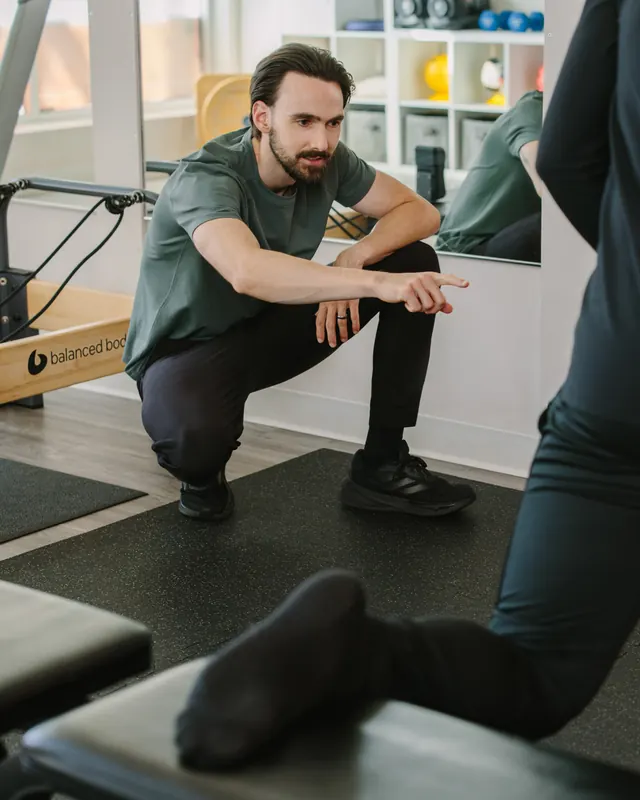
Runner's knee is a common name for pain around or behind the kneecap, also called patellofemoral pain. It usually builds gradually rather than starting from one injury, after more running, extra stairs at work or a hilly walking holiday. The kneecap takes a lot of load on downhills, stairs and long runs, and pain often follows a change in distance, hills or speed that the knee wasn't ready for. We check whether stairs, squatting or running bring on your familiar kneecap pain. Then we help you choose what to change in training. Hands-on treatment, taping and IMS where it suits can ease pain along the way.
Checking the source
Pain around the kneecap has a typical pattern. We also check for tendon, joint and referred causes, so the plan fits what is happening.
Hip, thigh and calf strength
Your thigh muscles control how you lower yourself on stairs and downhills. We check hip, thigh and calf strength and choose knee exercises you can manage, adding hip exercises if they would help with the movements that hurt.
Progressive strengthening
Strength work is the core of care, with treatment to ease pain along the way. It starts at a level the knee tolerates and builds in steps.
Training load
We look at how your distance, hills and speed have changed in recent weeks, and which to adjust first.
Symptom monitoring
A next morning check is a reasonable guide to whether your current load suits the knee.
Running analysis
How you run can contribute to this kind of injury. Where it's relevant, we film your running, look at your gait, and talk through whether what we see is linked to your injury and what to change.
Common reasons people come in
Pain on downhills
Discomfort at the front of the knee that builds as you descend, on trails, hills or stairs.
Pain after sitting
A dull ache around the kneecap after a long drive, a flight or a day at a desk.
Pain that builds on long runs
Knee pain that starts partway through a run and gets worse as the distance grows.
Coming back after a break
Knee pain returning when you build up again after time off, illness or another injury.
Questions about runner's knee
Why does the front of my knee hurt when I run, especially downhill?
Downhills ask your thigh muscles to control each landing on a bent knee. If descents reliably bring on pain, try a flatter route or a shorter downhill section. Notice how the knee feels during the run and the next morning.
How can I tell whether the pain is coming from around my kneecap or somewhere else?
Pain around or behind the kneecap that shows up with downhill running, stairs, squatting or long periods of sitting fits the common pattern. Pain on the outside of the knee, below the kneecap, or deep in the joint can have other sources, including the IT band, the patellar tendon, the meniscus or the hip. If your knee gets stuck after an injury and you can't straighten it, see a doctor or go to urgent care the same day. If your knee repeatedly gives way or swells after running, stop running and book a physiotherapy appointment with us. We'll assess it and point you to your doctor if needed. A physiotherapist can sort this out by examining the knee and seeing how it responds to load.
Can I keep running, and how should I judge the next day's symptoms?
If the pain stays mild, you run without a limp and the knee feels back to its usual level by the next morning, a shorter or easier run may be reasonable. If it is more sore or stiff, or the pain lingers into the next day, cut back the next run's distance, hills or speed. Stop and have it assessed if the pain builds, you start limping or the knee swells. This is a general guide, and a physiotherapist can set limits that fit your knee.
What would a physiotherapist assess, and when would a running analysis add useful information?
Expect questions about your training, routes and footwear, then an examination of the knee, hip, ankle and foot, and strength testing for the hip, thigh and calf. We also see how the knee responds to loaded movements such as squats and step downs. A running analysis can add useful information when pain only appears while running, keeps returning with each training block, or stairs and squats feel fine in the clinic but running brings on your familiar pain. Video can show things like step width and step rate, and we'll talk through whether what we see is linked to your knee and what to change.
How do I build back to hills, longer runs and my usual weekly distance?
Build back in stages, changing one thing at a time. Start with a route and pace your knee tolerates, with walk breaks if needed. If descents bring on pain, start with a short downhill section and see how the knee feels during the run and the next morning. Keep up your strength work alongside the running. If symptoms creep up, return to the last level that felt fine. A physiotherapist can set the steps for your own weekly distance, so you aren't guessing.
When to get medical help
Go to an emergency department right away if your knee quickly becomes hot, swollen and very painful to move, even without a fever, or if you can't put weight on the leg after an injury or fall.
See a doctor today for new pain or swelling in one calf that you can't explain, especially if it feels warm or tender. Call 911 for sudden shortness of breath, chest pain or coughing up blood.
See a doctor or go to urgent care the same day if your knee gets stuck after an injury and you can't straighten it. Stop running and book a physiotherapy appointment with us right away if your knee repeatedly gives way or swells, or if the pain wakes you at night or keeps getting worse despite cutting back. We'll assess it, and if we think you need imaging or a doctor's input, we'll point you to your doctor and share our findings with them.
Not sure if it's urgent? Call HealthLink BC at 8-1-1 to speak with a nurse, day or night.
Who you'll see: one of our physiotherapists, in a one-on-one physiotherapy appointment. We bill this visit as physiotherapy, and most, if not all, extended health plans cover at least some physiotherapy. We direct bill most major insurers.
Which appointment fits: A regular physiotherapy visit fits best if you can't run yet, or if the first job is working out what is hurting. A running assessment fits when your running mechanics or training need a closer look. It runs 60 minutes, costs $185, and is with Charles or Al. It adds slow motion video filmed from the side and behind on your own phone, strength and movement testing, and a training and footwear review.
Often connected to: jumper's knee, knee pain, IT band syndrome and hip pain. Related services: Sports Injury Physiotherapy and Kinesiology.
Book an assessment
Choose your appointment and book online. What to expect at your first visit
Book now