Physiotherapy for Meniscus Tears in Kitsilano, Vancouver
Physiotherapy for a torn meniscus, whether it came from a sudden twist or built up over time, with treatment and exercise to ease pain, restore movement and get you back to what you do.
Clinically reviewed by Charles Sutton, Registered Physiotherapist, November 2026
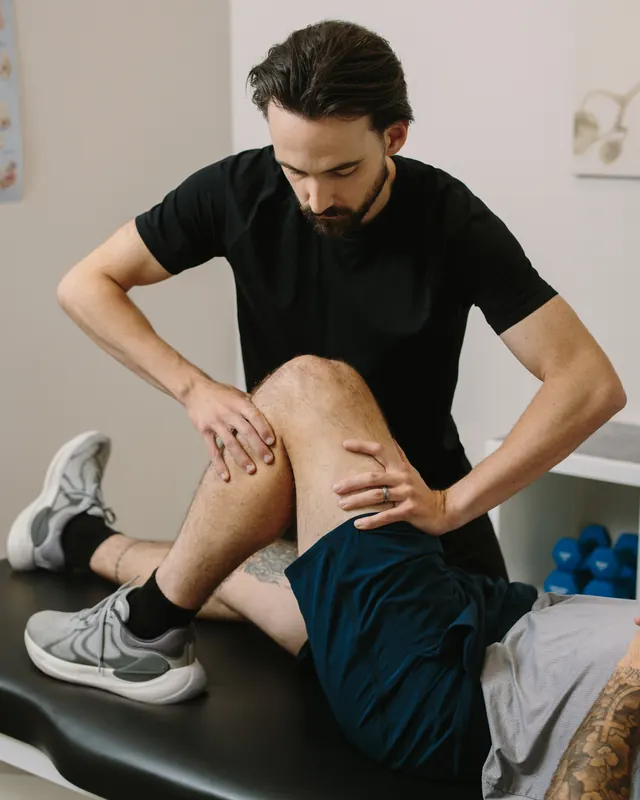
What meniscus physiotherapy involves
The menisci are two C-shaped cushions of cartilage between the thigh bone and the shin bone. They spread load and help steady the knee. Tears happen in two main ways: suddenly, often with a twist on a bent knee in sport, or gradually, as the cartilage changes with age, often with no single injury at all. We assess the knee, work out which kind of tear fits your story and examination, then pair treatment with exercise in a plan built around what you need to get back to. Hands-on treatment helps ease stiffness and swelling along the way.
Treatment to ease pain
Treatment and advice to calm a sore, swollen knee and help it move comfortably again.
Strength and control
Progressive strength work for the thigh, hip and calf, so the muscles share the load the meniscus carries.
A clear next step
If the knee locks, keeps giving way or stops improving, we tell you when a doctor's or surgeon's opinion is the right next step.
Physiotherapy first for many tears
For degenerative tears, the kind that become common from middle age, trials have found a structured physiotherapy program works about as well as keyhole surgery to trim the meniscus, and an international clinical guideline recommends against keyhole surgery for nearly all degenerative knee problems. Sudden tears in younger, active people are different: some can be repaired surgically, and a knee that locks needs a prompt medical opinion. Either way, physiotherapy is part of the plan. If surgery is planned, we work on swelling, knee movement and thigh strength while you wait, so you go in as strong as you can, which gives you a better chance of a good recovery. Afterwards, we work within your surgeon's protocol.
Common reasons people come in
A twist, then a sore, swollen knee
Often in sport, with pain along the side of the joint and swelling over the next day.
Knee pain without a clear injury
Gradual pain, often on the inner side of the knee, sometimes after squatting or kneeling.
An MRI that shows a tear
Many tears on MRI cause no pain at all, so we look at how your knee behaves.
Catching or clicking
A knee that catches now and then but doesn't lock is worth assessing.
Waiting for a surgical opinion
Rehab can start now. It helps whether or not you end up having surgery, and going in with a stronger knee gives you a better chance of a good recovery.
After meniscus surgery
Rehabilitation within your surgeon's protocol, whether the meniscus was repaired or trimmed.
Questions about meniscus tears
Can a torn meniscus heal without surgery?
It depends on the tear. The outer edge of the meniscus has a blood supply, and some small tears there can heal, while much of the inner part heals poorly. Healing on a scan isn't the only goal, though. Many people with degenerative tears get back to their usual activities with physiotherapy and no surgery. We'll explain what your assessment suggests.
Do I need an MRI?
Not always. Your history and examination often guide the first steps, and many tears seen on MRI in middle-aged and older adults cause no symptoms at all. If your knee locks, keeps giving way or isn't improving with rehab, a doctor can arrange imaging.
Should I have keyhole surgery for a degenerative tear?
That's a decision for you and your doctor or surgeon, and we're glad to help you weigh it up. For degenerative tears, trials have found a structured physiotherapy program works about as well as keyhole surgery to trim the meniscus, with results followed for up to five years, so many people start with physiotherapy. A knee that truly locks is different and needs a prompt medical opinion.
What does a locked knee feel like, and is it urgent?
A locked knee gets stuck and you can't straighten it fully, often after a twist. That needs a same day assessment by a doctor or at urgent care, because a displaced piece of meniscus may need prompt treatment. Catching that frees itself is different and is worth assessing at your physiotherapy appointment.
Can I keep running or playing sport?
Often, with changes. What you can do depends on your symptoms and how the knee responds the next day. We'll set the level of activity that suits the knee now and build from there.
How does rehab change after a meniscus repair?
A repair usually means a more protected start, such as limits on bending the knee or putting weight through it for a period. The exact limits come from your surgeon and vary with the type of repair. Bring your surgeon's protocol to your first visit and we'll work within it.
Is physiotherapy for a meniscus tear covered by insurance?
Yes, in almost every case. Most, if not all, extended health plans cover at least some physiotherapy, and we bill this visit as physiotherapy. We direct bill most major insurers. Your plan sets how much it covers each year, so it's worth checking your amount with your insurer. If your knee injury is part of an ICBC or WorkSafeBC claim, ask us about direct billing before you book.
When to get medical help
- Go to an emergency department right away if your knee quickly becomes hot, swollen and very painful to move, even without a fever.
- See a doctor today for new pain or swelling in one calf that you can't explain, especially if it feels warm or tender. Call 911 for sudden shortness of breath, chest pain or coughing up blood.
- See a doctor or go to urgent care the same day if your knee gets stuck after an injury and you can't straighten it.
- After surgery, call your surgical team today if you develop a fever, the incision opens, redness spreads or drainage is new or increasing. If you can't reach them, go to urgent care.
Not sure if it's urgent? Call HealthLink BC at 8-1-1 to speak with a nurse, day or night.
Who you'll see: one of our physiotherapists, in a one-on-one physiotherapy appointment.
Related services: Kinesiology, Post-Surgical Coverage, Sports Injury Physiotherapy, Running Assessment. Often connected to: knee pain, ACL and knee ligament injuries, runner's knee.
Book an assessment
Choose your appointment and book online. What to expect at your first visit
Book now