Physiotherapy for ACL and Knee Ligament Injuries in Kitsilano, Vancouver
Physiotherapy for ACL injuries before surgery, after surgery or without surgery, and for MCL, LCL and PCL injuries, with a plan built on treatment, strength, movement and clear return to sport checks.
Clinically reviewed by Charles Sutton, Registered Physiotherapist, November 2026
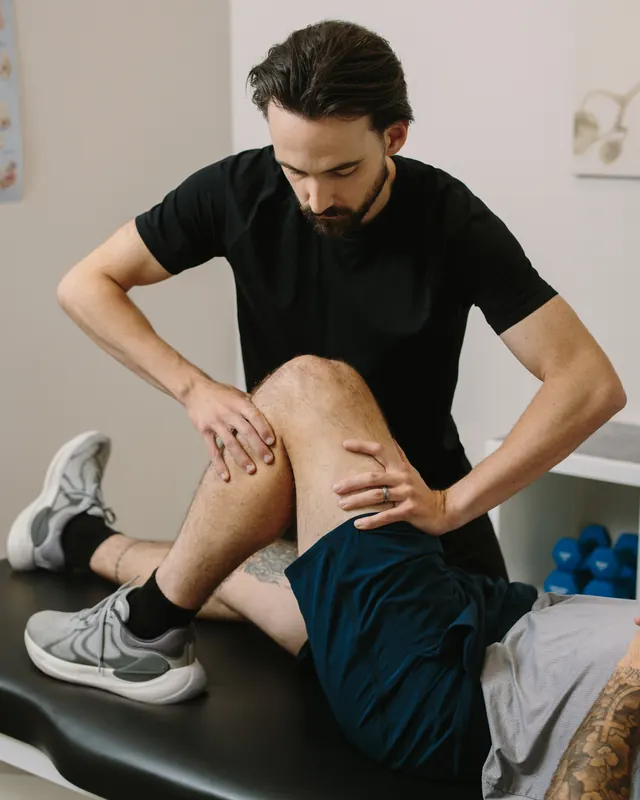
What ACL physiotherapy involves
The anterior cruciate ligament, or ACL, helps steady your knee when you turn. We see people preparing for surgery, recovering after surgery or managing the injury without it. Some people return to their activities with rehabilitation alone. If your knee keeps giving way, you have another knee injury or you want to return to a sport with quick turns, discuss the options with your care team. After surgery, we work within your surgeon's protocol. Hands-on treatment, such as manual therapy and soft tissue work, helps ease swelling and stiffness along the way, and massage with one of our RMTs can be added.
Before surgery
The better you go into surgery, the better you tend to come out of it. Treatment and exercise settle swelling, restore full knee movement and build strength while you wait.
Without surgery
Treatment alongside progressive strength, balance and movement control, with clear measures along the way.
After surgery
Rehabilitation that follows your surgeon's protocol, including any limits after a meniscus repair.
MCL, LCL and PCL injuries
The knee has three other main ligaments, and they can be injured on their own or along with the ACL. We assess which structures are involved, treat the knee and guide your return to activity, and we tell you when a surgeon's opinion is the right next step.
MCL injuries
The ligament on the inner side of the knee, often hurt when the knee is pushed inward, as in a tackle or a twisting fall on skis. Most MCL injuries are treated with physiotherapy rather than surgery: treatment and exercise to protect the ligament while it heals, then strength, movement and a graded return to sport.
LCL injuries
The ligament on the outer side of the knee. LCL injuries are less common and often involve other structures at the back and outside of the knee, so we check for those carefully. Milder injuries are treated with physiotherapy, and more serious ones may need a surgeon's opinion.
PCL injuries
The ligament at the back of the knee, often hurt by a fall onto a bent knee or by the knee striking the dashboard in a car accident. Many PCL injuries are treated with physiotherapy, with a strong focus on thigh strength. Injuries to more than one ligament may need a surgeon's opinion.
Common reasons people come in
A new knee injury
Many people see us first, before anyone else has looked at the knee. We assess it, start treatment and tell you when a doctor's or surgeon's opinion is the next step.
Waiting for a surgical opinion
Waits for a surgical opinion can be long, and rehab shouldn't wait for it. The early work is the same whether or not you end up having surgery, so we start now.
Preparing for ACL surgery
Building strength and full knee movement before the operation, so you go in as strong as you can.
Managing an ACL injury without surgery
Treatment and a structured strength and movement program, with testing along the way.
After ACL surgery
Rehabilitation that follows your surgeon's protocol, with or without a meniscus repair.
Returning to sport after surgery
Running, jumping, cutting and a return to practice, each started when testing shows the knee is ready. This includes people who did their early rehab elsewhere.
Return to sport is based on criteria, not just time
Running, jumping, changing direction and returning to practice, competition or skiing each start when the knee meets agreed measures. Time still matters too. The graft needs months to heal, and research links a return before about nine months after surgery, or before your thigh strength is close to the other side, with more reinjuries. We do return to sport testing for ACL injuries in the clinic. For ACL rehabilitation, check the physiotherapy benefits in your own plan or injury claim. The Vancouver Coastal Health funding described on our post-surgical coverage page is for eligible joint replacement procedures.
Strength
Strong thigh and hip muscles help protect the knee when you land, pivot and change direction. We test with a single leg squat and a single leg 90 degree wall sit hold, compare your legs and consider how much strength your activity requires, alongside swelling, movement, hopping, landing and confidence.
Hop and movement testing
Hopping, landing and movement tests against your other side. We also look at how you land and how confident you feel using the knee.
Sport specific drills
Drills that match what your sport or activity asks of the knee.
Questions about ACL injuries
What can I work on while waiting for a surgical opinion or an operation?
Most early work is the same either way: treatment and exercise to settle swelling, regain full knee movement (especially straightening), walk normally and build strength in the thigh, hip and calf. People who build strength and movement before surgery tend to recover better afterwards, with better knee function two years on in some studies, and the same work helps if you decide not to have surgery. If your surgeon has given instructions, we work within them.
What does physiotherapy involve if my ACL injury is managed without surgery?
It combines treatment with progressive strength, balance and movement control, including how you land, pivot and change direction. Some people return to their activities this way. Others choose surgery later, for example if the knee keeps giving way. If you have another knee injury or want to return to a sport with quick turns, discuss the options with your care team.
How does the plan change if my surgeon also repaired my meniscus?
A meniscus repair often means a more protected start, such as limits on bending the knee or putting weight through it for a period. The exact limits come from your surgeon and vary with the type of repair. Bring your surgeon's protocol to your first visit. We work within it and progress each stage as your surgeon allows.
What will you measure before I start running, jumping or changing direction?
Before each stage we check things like swelling, knee range of movement, strength (a single leg squat and a single leg 90 degree wall sit hold, compared with your other leg), balance, and how well the knee controls itself when you step, squat and land. Small landing or hopping drills may begin before continuous running. We build up running, harder jumps and changes of direction as the knee heals and you meet the goals for each activity. Each stage starts when the measures show the knee is ready, not on a date alone.
How do we decide when I'm ready for practice, competition or skiing?
Return to sport is based on criteria, not just the number of months since surgery or injury. We check swelling, movement, strength (a single leg squat and a single leg 90 degree wall sit hold), hopping and landing, and review how your knee responds to full practices, how confident you feel turning or landing, and what your sport demands. After surgery, we also consider healing time and your surgeon's advice. Passing a test cannot guarantee that the knee will avoid another injury.
Do you also treat MCL, LCL and PCL injuries?
Yes. The knee's other ligaments can be injured on their own or along with the ACL. Most MCL injuries are treated with physiotherapy rather than surgery, and many PCL injuries are too. LCL injuries often involve other structures at the back and outside of the knee, so some need a surgeon's opinion. We assess the knee, treat it and plan your return to activity from there.
Is physiotherapy for an ACL injury covered by insurance?
Yes, in almost every case. Most, if not all, extended health plans cover at least some physiotherapy, and we bill this visit as physiotherapy. We direct bill most major insurers. Your plan sets how much it covers each year, so it's worth checking your amount with your insurer. If your knee injury is part of an ICBC or WorkSafeBC claim, ask us about direct billing before you book.
When to get medical help
- Go to an emergency department right away if your knee quickly becomes hot, swollen and very painful to move, even without a fever, or if you can't put weight on the leg after a new injury.
- See a doctor today for new pain or swelling in one calf that you can't explain, especially if it feels warm or tender. Call 911 for sudden shortness of breath, chest pain or coughing up blood.
- See a doctor or go to urgent care the same day if your knee gets stuck after an injury and you can't straighten it.
- After surgery, call your surgical team today if you develop a fever, the incision opens, redness spreads or drainage is new or increasing. If you can't reach them, go to urgent care.
Not sure if it's urgent? Call HealthLink BC at 8-1-1 to speak with a nurse, day or night.
Who you'll see: one of our physiotherapists, in a one-on-one physiotherapy appointment.
Related services: Kinesiology, Post-Surgical Coverage, Sports Injury Physiotherapy, Running Assessment. Often connected to: knee pain, meniscus tears, field sports.
Book an assessment
Choose your appointment and book online. What to expect at your first visit
Book now