Physiotherapy After Knee Replacement in Kitsilano, Vancouver
Physiotherapy after a knee replacement, built around your surgeon's instructions and your hospital discharge plan.
Clinically reviewed by Charles Sutton, Registered Physiotherapist, November 2026
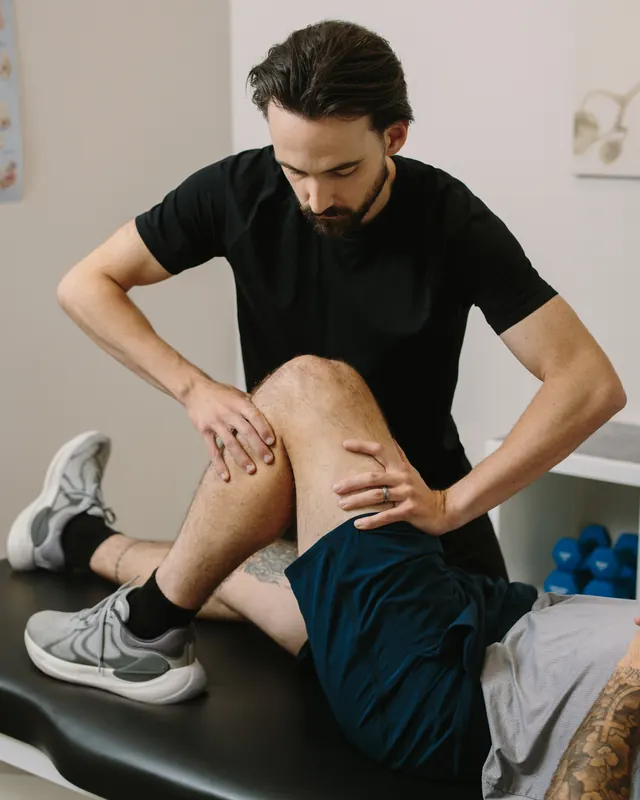
What rehab after knee replacement involves
Bring the instructions you received at the hospital. We'll use them as our starting point and follow your surgeon's protocol. From there, treatment and exercise work on the pieces that bring back everyday movement: straightening and bending the knee, walking, stairs, and strength in the whole leg. Then we build toward the activities you want back. Progress is gradual, and each step is built on the one before it. Hands-on treatment can help with stiffness, swelling and getting your knee to bend and straighten.
Bending and straightening
Working toward a fully straight knee and enough bend for chairs, stairs and daily tasks. Your surgical team may give you targets, and we work with them.
Strength and walking
Progressive strengthening for the thigh, hip and calf, since strong thigh muscles make walking, stairs and getting up from a chair easier with the new knee, along with practice walking evenly and with confidence.
Stairs and daily tasks
Step by step practice with stairs, getting in and out of a chair, and the movements you need at home.
Back to what you enjoy
Once the basics are solid, we build toward what you most want back, such as long walks, hiking, cycling, golf, swimming or gardening, at a pace your surgeon is happy with.
Common reasons people come in
Getting ready for surgery
Building strength and movement while you wait for your operation, so you go in as strong as you can be.
Starting after discharge
Your first outpatient visits once you are home from the hospital.
Stiffness and swelling
Help moving a knee that feels tight, heavy or slow to bend.
Walking and stairs
Working on a steadier walk and managing steps at home and outdoors.
Both knees replaced
If you had both knees replaced, we'll ask which tasks are hardest at home, such as getting out of bed or standing up from the toilet.
Getting back to activity
Building up to longer walks, cycling, golf, hiking or the sport you've missed, once your surgeon gives the go ahead.
Questions about rehab after knee replacement
When should I book my first visit?
Follow the hospital's instructions about when to start. If Vancouver General Hospital or UBC Hospital gave you a funded referral, choose one clinic for all your visits. Use them within six months of surgery. At Seva, the visits take place in the clinic. We bill Vancouver Coastal Health directly, so you pay nothing for covered visits.
What should I bring from the hospital, and how will you use my discharge exercise plan?
Bring your hospital instructions, exercise plan and medication list. If you are using funded visits, bring your referral form. If you can't find it, call us before your appointment. We use the exercise plan as the starting point, then adjust it as your knee recovers, always within your surgeon's protocol.
How will we work on straightening and bending my knee, walking and managing stairs?
We'll practise bending and straightening your knee, standing up from a chair and walking with your usual aid. If you have stairs at home, we'll practise with a rail. We follow your surgeon's guidance throughout.
Which changes in pain, swelling or the incision should prompt me to contact my surgical team?
Call 911 for sudden shortness of breath, chest pain or coughing up blood. Contact your doctor or surgical team today for new calf pain, warmth or redness, or a large increase in swelling in the operated leg. Call your surgical team today if you develop a fever, the wound opens, redness spreads, or fluid from the wound increases or starts again after it was dry. If you can't reach the team, seek urgent medical care.
Can I start physiotherapy before my surgery?
Yes, and it's worth doing. Many people in Canada wait six months or more for a knee replacement, and going in stronger and more mobile is linked to a quicker, more successful recovery. Many people come in while they wait, to build strength in the leg, keep the knee moving and learn the exercises they'll use afterwards. These are regular physiotherapy visits, which many extended health plans cover, and they don't use any of the funded visits for after your surgery. If you're also working on blood sugar, weight or menopause symptoms before surgery, our naturopathic doctor, Dr. Katrina Allison, ND, can help with that side.
How do I get back to activities such as cycling, golf or hiking?
In stages, once your surgeon is happy with how the knee is healing. Walking, cycling, swimming and golf are common goals after a knee replacement. Ask your surgeon before higher impact activities such as running or jumping sports. Tell us what you want to get back to, and we'll build your plan toward it.
I've had a manipulation under anesthetic. When should I start?
Follow your surgeon's instructions, which usually mean starting soon afterwards, since the aim is to keep the bend gained during the procedure. A referral after a knee manipulation covers 6 funded visits, so bring the form you were given.
How many visits are covered?
If you had your surgery at Vancouver General Hospital or UBC Hospital, your referral covers 12 visits after one knee replacement or an operation to replace an existing artificial knee. It covers 24 visits after both knees are replaced. If your surgeon moved your knee under anesthetic to improve bending, that referral covers 6 visits. Bring the form you received when you left the hospital.
When to get medical help
Call 911 right away for sudden shortness of breath, chest pain or coughing up blood.
Contact your doctor or surgical team today for new calf pain, warmth or redness, or a large increase in swelling in the operated leg.
Call your surgical team today if you develop a fever, the wound opens, redness spreads, or fluid from the wound increases or starts again after it was dry. If you can't reach the team, seek urgent medical care.
Not sure if it's urgent? Call HealthLink BC at 8-1-1 to speak with a nurse, day or night.
Who you'll see: one of our physiotherapists, in a one-on-one physiotherapy appointment.
Outside your funded visits, including before surgery, seniors 65 and over pay a reduced rate of $85 for a standard physiotherapy visit at Seva. It's our own clinic's discount, so rates elsewhere may differ.
Coverage and booking: see Post-Surgical Coverage for funding, referral forms and getting started. Related services: Kinesiology, Clinical Pilates. Often connected to: knee pain, knee and hip arthritis and hip replacement rehab.
Book your first visit
Choose your appointment and book online. What to expect at your first visit
Book now