Knee and Hip Arthritis Physiotherapy in Kitsilano, Vancouver
Physiotherapy for knee and hip osteoarthritis that keeps you moving and doing what you enjoy, whether you're working to avoid surgery or getting ready for it.
Clinically reviewed by Charles Sutton, Registered Physiotherapist, November 2026
What physiotherapy for arthritis involves
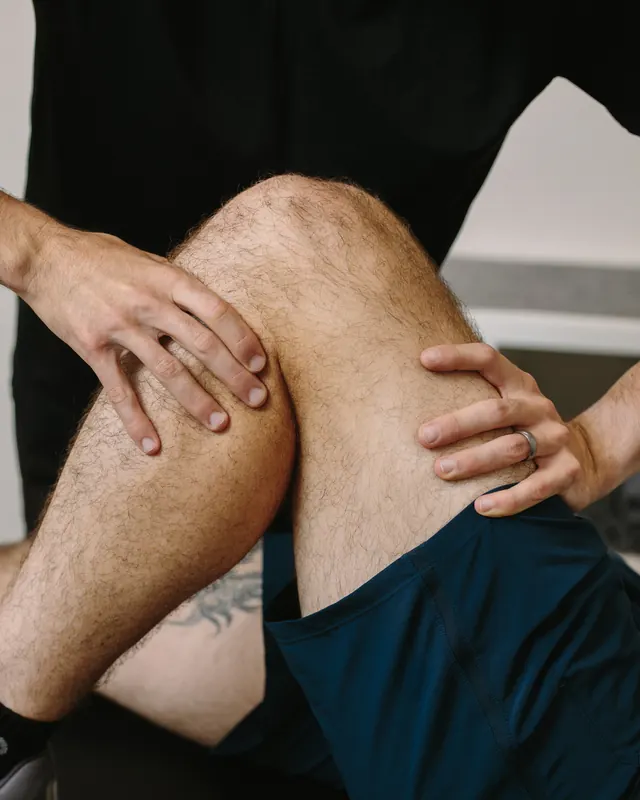
Physiotherapy is a first line treatment for knee and hip osteoarthritis. What an X-ray shows doesn't match how a joint feels very well, and strength, movement and how the joint is loaded make a real difference, which is why the right plan can change so much. We find which activities are hardest for you and why, then combine hands on treatment, guided strength and movement work and a plan for flares, built around the things you want to keep doing. For some people, that keeps surgery off the table. For others, it means going into surgery stronger, which is linked to a quicker, more successful recovery. Joint pain can also be tied to metabolic health, and for many women it flares around perimenopause and menopause. If that's part of your picture, our naturopathic doctor, Dr. Katrina Allison, ND, can look at that side alongside your physiotherapy.
Strength around the joint
Progressive strengthening for the thigh, hip and calf, since stronger muscles make stairs, hills and getting up from a chair easier on a sore joint.
Movement and balance
Work on range, balance and walking, so stiffness eases and everyday movement feels steadier.
A plan for flares
What to do on the days your joint is sore, so a flare doesn't undo your progress.
Hands on treatment
Manual therapy and other hands on techniques where they help you move more comfortably, with massage therapy from our RMTs as an option alongside.
Common reasons people come in
Pain on stairs and walks
A knee or hip that aches on stairs, longer walks or getting out of the car.
Morning stiffness
A joint that's stiff first thing or after sitting, and loosens once you get moving.
Trying to avoid surgery
Wanting to give physiotherapy a proper try before deciding about surgery.
Waiting for a replacement
Getting as strong and mobile as you can before surgery, which is linked to a quicker, more successful recovery.
Staying active
Keeping up walking, hiking, cycling, golf or pickleball with a joint that complains.
A flare that won't settle
A joint that's more painful or swollen than usual after a busy week.
Questions about knee and hip arthritis
Can physiotherapy help knee or hip arthritis?
Yes. Clinical guidelines put exercise and education, the heart of physiotherapy for arthritis, first in line for knee and hip osteoarthritis, with injections or surgery as later options if they're needed. It can ease pain, help you walk, climb stairs and stay active, and for many people it puts surgery off. In one trial of people already eligible for a knee replacement, about three in four who did a 12 week program of exercise, education and other non surgical care hadn't had the operation a year later. What it looks like for you depends on your assessment.
Do I need an X-ray first?
Usually not. Osteoarthritis is normally diagnosed from your symptoms and an examination, and X-ray findings don't match pain well: some people with marked changes have little pain, and the reverse. If something in your assessment suggests imaging may help, we'll point you to your doctor and share our findings.
Will exercise make my arthritis worse?
It shouldn't. A little extra soreness can happen when you start something new, and it usually settles. If your knee or hip feels worse rather than better, we'll change the plan, adjusting the exercises or how much you do, until it settles.
Can physiotherapy help me get ready for a joint replacement?
Yes, and it's one of the most useful things you can do. Many people in Canada wait six months or more for a hip or knee replacement. Building strength and keeping the joint moving in that time means you go into surgery as strong and mobile as you can be, which is linked to a quicker, more successful recovery. If you can, don't wait until after surgery to start. After surgery, see rehab after knee replacement or hip replacement.
Can I keep running, hiking or playing pickleball?
Often, yes, sometimes with changes to how far, how often or how hard. We'll help you find what your knee or hip tolerates and build from there, rather than stopping everything.
Is physiotherapy for arthritis covered by insurance?
Yes, in almost every case. Most, if not all, extended health plans cover at least some physiotherapy, and we bill this visit as physiotherapy. We direct bill most major insurers. Your plan sets how much it covers each year, so it's worth checking your amount with your insurer. At Seva, seniors 65 and over pay a reduced rate of $85 for a standard physiotherapy visit. It's our own clinic's discount, so rates elsewhere may differ.
When to get medical help
Go to an emergency department right away if your knee or hip quickly becomes hot, swollen and very painful to move, even without a fever, or if you can't put weight on the leg after a fall or injury.
See a doctor today for new pain or swelling in one calf that you can't explain, especially if it feels warm or tender. Call 911 for sudden shortness of breath, chest pain or coughing up blood.
Not sure if it's urgent? Call HealthLink BC at 8-1-1 to speak with a nurse, day or night.
Who you'll see: one of our physiotherapists, in a one-on-one physiotherapy appointment.
Coverage and booking: see Fees and Insurance. Related services: Kinesiology, Clinical Pilates, Massage Therapy, Naturopathic Medicine. Often connected to: knee pain, hip pain, knee replacement rehab and hip replacement rehab.
Book your first visit
Choose your appointment and book online. What to expect at your first visit
Book now