Calf Strain Physiotherapy in Kitsilano, Vancouver
Treatment for a pulled or torn calf muscle, including a cramp that never quite settles and the calf that tightens a few kilometres into every run, with a staged plan back to running.
Clinically reviewed by Charles Sutton, Registered Physiotherapist, November 2026
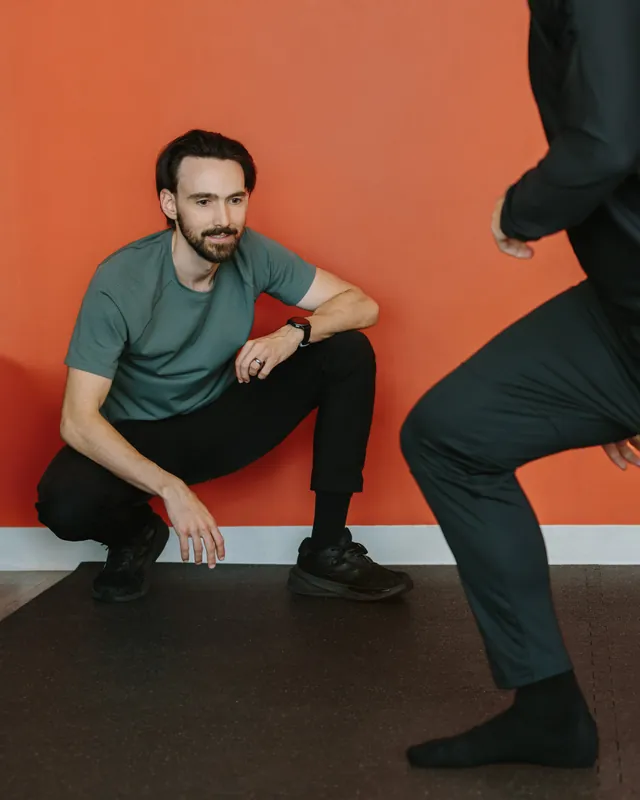
What calf strain physiotherapy involves
A calf strain is a tear in one of the two main calf muscles. The gastrocnemius, the larger muscle you can see, usually tears suddenly as you push off or sprint, and many people say it felt like being kicked. The soleus sits deeper and lower down. Its strains are common in distance runners and often build quietly: the calf feels fine walking, then tightens partway into a run. We work out where the injury is likely to be and how much load your calf can take, then rebuild it for the running you want to get back to. Hands-on treatment and IMS can ease tightness in the calf along the way.
Where it hurts, and how much
We test your calf with the knee straight and then bent, which load the two muscles differently, and press along it to find where it's tender. Calf raises on one leg show how much strength you've lost compared with the other side.
Ruling out what it isn't
Calf pain isn't always a strain. New or increasing swelling, warmth or redness needs a doctor first, even after an injury. Pain near the heel may be your Achilles, and pain that travels down from your back can start at a nerve. We check for each before treating it as a muscle.
Strength, rebuilt in stages
We start with calf exercises your leg tolerates, often holds and slow raises, then add load and speed until the injured side matches the other. Strength work carries on once you're running again.
A staged return to running
When your calf is ready, we start with short, easy runs on level ground. Distance, speed and hills are built up separately, to suit your symptoms and the running you're returning to.
Why it happened
We look at what changed beforehand: more distance, faster sessions, hills, new shoes or less recovery between runs. Calf strains often recur, so your training and what your calf can tolerate stay part of the plan.
Running analysis
When the calf keeps tightening on runs, how you run can be part of the picture. Where it's relevant, we film your running and talk through whether anything we see is adding load to your calf.
Common reasons people come in
A sudden pull mid run
A sharp grab in the calf during a sprint, a hill or a push off, sometimes with the feeling of being kicked.
Tightness that builds on runs
A calf that feels fine walking, then tightens or cramps a few kilometres into a run.
Strains that keep coming back
The same calf going again each time you return to longer or faster running.
Court and field sports
Calf strains in tennis, pickleball, soccer and other sports with quick starts, especially as you get older.
Questions about calf strains
Why does my calf feel fine walking but hurt when I run?
Walking asks relatively little of your calf. Running asks it to absorb and push off with several times your body weight on every stride, and the deeper soleus muscle does much of that work. A strain that's quiet at walking pace can tighten up once the distance or speed goes beyond what the healing muscle can handle. That's why we test your calf under load, not just at rest, and rebuild it to the level running asks of it. If the tightness comes on at the same point every run, settles within minutes of stopping and keeps returning, or comes with numbness or weakness, tell us. That pattern can point to something other than a strain, and we'll look again.
Is it a calf cramp or a strain?
A cramp is the muscle locking up on its own. It usually eases within minutes, and the calf may feel a little sore afterwards. A strain often starts the same way, as a sudden grab or a cramp that won't let go, but the pain stays: walking is sore, rising onto your toes hurts or feels weak, and one spot is tender to press. If a cramp is still bothering you the next day, treat it as a possible strain and get it assessed. A calf that cramps at the same point in every run is often a soleus strain rather than a true cramp. Frequent cramps at night or at rest, with no injury, are worth raising with your doctor.
How long does a calf strain take to heal?
Recovery is measured by what your calf can do, not by the calendar. A mild strain often settles within a few weeks, and a bigger tear takes longer. Instead of counting days, we work through markers: walking without a limp, calf raises on the injured leg that come close to the other side, hopping without pain, then easy runs that feel fine the next morning. Passing each one moves you to the next stage.
Should I stretch it, rest it or keep moving?
In the first few days, keep walking within comfort and avoid hard stretching, which can aggravate a fresh tear. Gentle movement and early strength work, at a level your calf tolerates, usually help more than complete rest. We'll show you where to start and when to progress.
When can I run again, and how do I build back up?
We look for a few markers first: brisk walking without a limp, hopping on the injured leg without pain, and calf raises on that leg that come close to the other side. Then you start with short, easy runs on level ground, every second day. We build distance, speed and hills separately, depending on your symptoms and the running you're returning to. Check how your calf feels the next morning before each step up. If tightness returns at the same point, shorten the run to a distance your calf handles, and tell us if it keeps happening.
Is it a calf strain or my Achilles?
Calf strains usually hurt in the calf muscle or where it meets the tendon. Achilles pain often sits along the tendon above the heel or where it joins the heel, and tends to be stiff first thing in the morning before easing as you warm up. A sudden pop or kick at the back of the ankle or lower calf, with weak push off, is different again and needs assessment the same day, even if you can walk. Where it hurts guides the examination, and we check for all three. If it's your Achilles, our Achilles tendinopathy page explains how we treat it.
Can a running assessment stop it coming back?
It can help when the strain keeps returning, or when your training or how you run seems to be part of the cause. A running assessment looks at the whole picture of how your body handles load: your recent training, range of motion and strength through the calf, the rest of the leg and the hips, and your running, filmed from the side and behind. Then we talk through what to change, whether that's your training, your strength and mobility or something in how you run. Changing how you run isn't always the answer, and we'll tell you when it isn't.
When to get medical help
Go to an emergency department right away for severe or rapidly worsening lower leg pain after an injury, especially if the leg feels tight or swollen, or if your foot turns cold or pale, goes numb or is hard to move.
See a doctor or go to urgent care the same day if you felt a sudden pop or kick at the back of your ankle or lower calf and pushing off now feels weak, even if you can still walk.
See a doctor today if one calf becomes newly or increasingly swollen, warm or red, or the pain keeps getting worse instead of easing, especially after a long flight or car trip, surgery or time off your feet. Call 911 for sudden shortness of breath, chest pain or coughing up blood.
Not sure if it's urgent? Call HealthLink BC at 8-1-1 to speak with a nurse, day or night.
Who you'll see: one of our physiotherapists, in a one-on-one physiotherapy appointment. We bill this visit as physiotherapy, and most, if not all, extended health plans cover at least some physiotherapy. We direct bill most major insurers.
Which appointment fits: A regular physiotherapy visit fits best if you can't run yet, or if the first job is working out what is hurting. A running assessment fits when your running mechanics or training need a closer look. It runs 60 minutes, costs $185, and is with Charles or Al. It adds slow motion video filmed from the side and behind on your own phone, strength and movement testing, and a training and footwear review.
Often connected to: Achilles tendinopathy, shin splints and stress fractures in runners. Related services: Sports Injury Physiotherapy, Kinesiology and Massage Therapy.
Book an assessment
Choose your appointment and book online. What to expect at your first visit
Book now