Ankle Sprain Physiotherapy in Kitsilano, Vancouver
Physiotherapy for a newly sprained ankle or one that keeps giving way, from getting comfortable on stairs to returning to trails and field sports.
Clinically reviewed by Charles Sutton, Registered Physiotherapist, November 2026
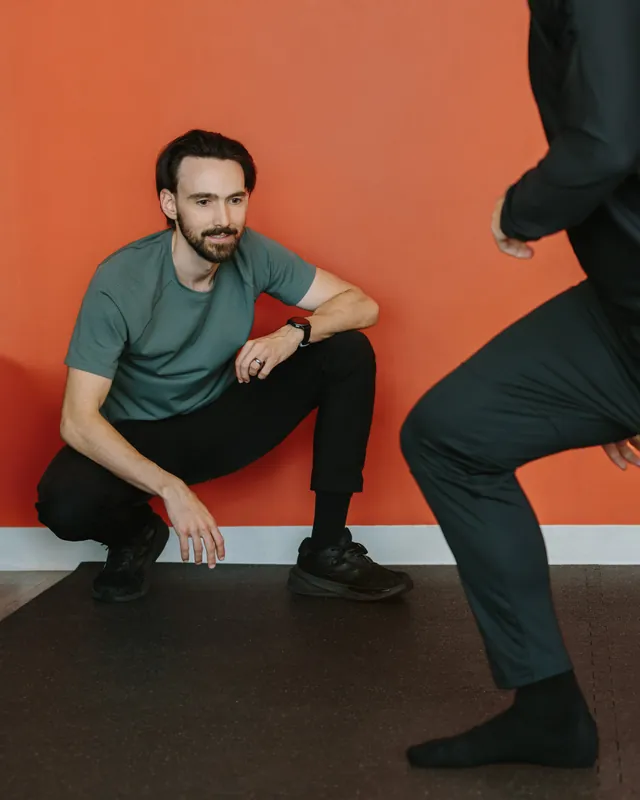
What ankle sprain physiotherapy involves
A sprain is an injury to the ligaments that support the ankle, most often on the outer side, though sprains can also involve the inner side or the ligaments higher up between the shin bones (a high ankle sprain). Most can be managed without surgery. We check how the ankle moves, bears weight and balances, then pair treatment with exercise in a plan built around what you need to get back to. We also look at why it happened, such as an old sprain that left the ankle less stable, or strength and balance that never fully came back. Working on both helps keep it from becoming a recurring problem. Hands-on treatment, such as joint mobilization and taping, can ease stiffness and help you move with more confidence, and massage with one of our RMTs can be added.
Early, guided loading
Walking and gentle movement introduced early, at a level the ankle tolerates, rather than rest alone.
Balance and strength
Calf, foot and hip strength and balance work. Strong muscles help control the ankle as you land and on uneven ground, and balance training can lower the chance of spraining the same ankle again.
Clear return checks
Agreed checks for walking, hopping and changing direction before you go back to trails or your sport.
Common reasons people come in
A fresh roll
An ankle that is swollen, bruised or sore to walk on after a twist or a misstep.
An ankle that keeps rolling
Repeated sprains, or an ankle that feels unreliable on uneven ground.
Stiffness or swelling that lingers
An ankle that hasn't settled weeks after the injury.
Back to trails or field sports
Rebuilding the strength, balance and confidence to run, jump and cut again.
Recurring sprains and instability
If the same ankle keeps rolling, the cause is often more than the ligaments. Balance, strength and control usually need work, and support such as a brace or tape can play a part. Balance training can reduce the chance of another sprain. A brace may also help during activities where you have rolled the ankle before.
Balance and control
Standing and moving drills that train the ankle to react quickly on uneven ground.
Strength
Calf, foot and hip strengthening, progressed as the ankle allows, to help you control a landing and adjust to uneven ground.
Support when it helps
Guidance on whether a brace or tape suits your ankle and your activities.
Returning to trails and field sports
For trails, we may start with level ground, then try uneven footing, turns and short descents. Going back is decided by what your ankle can do, not by the calendar alone. We'll also talk through your training and footwear for the terrain you're going back to. For more on how we work with athletes, see our sports injury physiotherapy and field sports pages.
Questions about ankle sprains
I rolled my ankle. When should I get medical assessment or an X ray?
After a twist that causes ankle or midfoot pain, see a doctor or go to urgent care today if you couldn't take four steps when it happened and still can't. A fracture is also possible with tenderness at the back edge or tip of either ankle bone, over the bony bump on the outer midfoot, or over the bone on the inner midfoot just ahead of the ankle. If you're not sure where it hurts, book a physiotherapy appointment with us and we'll examine it. We check for signs of a possible fracture. If an X ray may help, we'll point you to your doctor and share our findings. Many sprains don't need an X ray. If pain or walking hasn't improved in five to seven days, book a physiotherapy appointment with us for reassessment. If your foot looks out of shape, feels numb or turns cold, pale or blue, go to an emergency department now.
What should I do about walking, swelling and stairs in the first few days?
Early, gentle movement usually helps more than rest alone. Once a serious injury has been checked for, put weight on the ankle gradually, and take stairs one at a time with a rail if you need it. If walking is very painful or you have a marked limp, we can tell you whether crutches or a brace would help. Moving your foot up and down and in small circles, raising the foot when you sit, and using a compression wrap can help with swelling. Crutches or a boot are sometimes used for a short time when walking is too painful. If pain is getting worse instead of easing, book a physiotherapy appointment with us right away and we'll assess it.
Why does the same ankle keep rolling or giving way?
An ankle can keep giving way if balance, strength or movement have not fully recovered. We'll check those along with the ligaments and watch how you land or step on uneven ground. Stiffness at the ankle, weak calves and hips, and returning to activity before the ankle is ready can add to it. We also check whether another injury needs separate attention.
When might a brace or tape help, and what should I work on alongside it?
A brace or tape can add support while the ankle recovers, and for sport when an ankle has rolled more than once. They work best alongside exercise, not in place of it. Balance, calf and foot strength, hip strength and landing practice are the usual focus. Research shows that balance training can lower the chance of spraining the same ankle again. We'll talk through whether support makes sense for you and for which activities.
How do I know I'm ready for uneven trails, jumping or changing direction on a field?
Readiness depends on what your ankle can do, not only on how many weeks have passed. Typical checks include walking and jogging without pain or a limp, balance on the injured side compared with the other, calf strength, hopping on one leg, and cutting and pivoting drills at increasing speed. Before a full return, we'll also ask how steady the ankle feels, how it responds the next day and whether you can complete a normal practice or a shorter trail outing. We'll go through where you are against these checks.
Is physiotherapy for an ankle sprain covered by insurance?
Yes, in almost every case. Most, if not all, extended health plans cover at least some physiotherapy, and we bill this visit as physiotherapy. We direct bill most major insurers. Your plan sets how much it covers each year, so it's worth checking your amount with your insurer. If your ankle injury is part of an ICBC or WorkSafeBC claim, ask us about direct billing before you book.
When to get medical help
See a doctor or go to urgent care first if, after an ankle injury:
- you couldn't take four steps right after the injury, and you still can't
- it is tender at the back edge or tip of either ankle bone, over the bony bump on the outer midfoot, or over the bone on the inner midfoot just ahead of the ankle
A sudden snap or the feeling of being kicked in the back of the ankle can mean a torn Achilles, even if you can still walk. Keep weight off that leg and go to urgent care or an emergency department today.
See a doctor today for new pain or swelling in one calf that you can't explain, especially if it feels warm or tender or you've been in a boot or on crutches. Call 911 for sudden shortness of breath, chest pain or coughing up blood.
Go to an emergency department right away if your ankle or foot looks out of shape, if your foot is numb, or if your foot is cold, pale or blue.
Book a physiotherapy appointment with us right away if pain or walking hasn't improved in five to seven days, or it's getting worse. We'll assess it, and if we think you need an X ray, we'll point you to your doctor and share our findings with them.
Not sure if it's urgent? Call HealthLink BC at 8-1-1 to speak with a nurse, day or night.
Who you'll see: one of our physiotherapists, in a one-on-one physiotherapy appointment.
Related services: Kinesiology, Sports Injury Physiotherapy, Running Assessment. Often connected to: field sports, plantar fasciitis.
Book an assessment
Choose your appointment and book online. What to expect at your first visit
Book now